
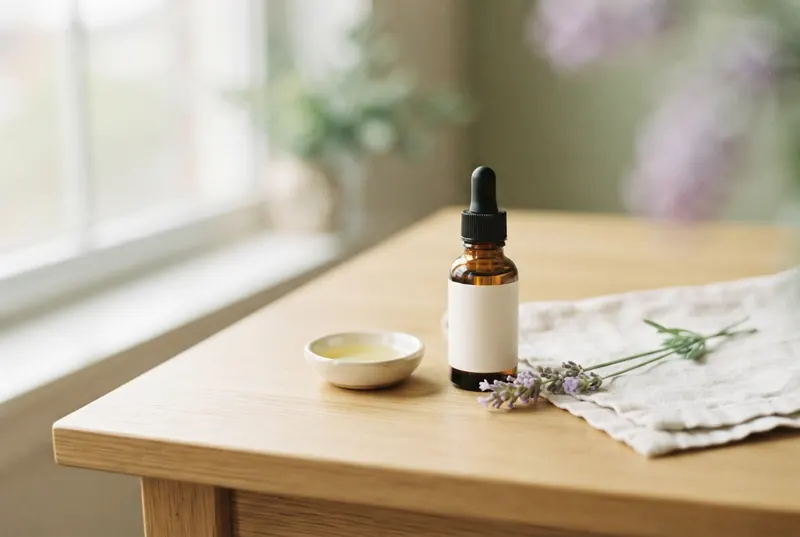
In our last aromatherapy post, The Power of Aromatherapy, we looked at a few oils people often try, like lavender, peppermint and lemon. This time, we’re looking at how to use them safely. That’s for you, and for the people and pets you share your space with.
Smell reaches memory and mood fast. Think of walking past a bakery, or catching the smell of a grandparent’s kitchen. You’re back there before you’ve had a single thought. Scent takes a shortcut. That’s part of what makes it a nice way to pause. It’s also why it’s worth going gently.
Why safety matters
Essential oils are strong plant extracts. A small bottle holds a lot of plant. “Natural” doesn’t mean harmless. The Ontario Poison Centre says essential oils can irritate the skin, eyes, mouth and stomach.
That doesn’t mean you have to give them up. A few simple habits let you enjoy a scent you like without the surprises.
Five safety basics
1. A little goes a long way
More isn’t better. Oils used on the skin need to be mixed with a plain carrier oil first. That’s called diluting. The Canadian Alliance of Aromatherapy suggests a mix of 1% to 4% for adults. A 1% mix is about one drop of essential oil in a teaspoon of carrier oil.
If you’ve bought a product that’s already made for the skin, like a lotion or roller, its label is your best guide. Not every oil belongs on the skin.
2. Try a small patch first
Before you use a new oil or product on your skin, it’s a good idea to test a small patch first. The inside of your forearm works well. You might wait a day or two. If you notice redness, itching or a rash, that one isn’t for you.
And if you’re pregnant, on medication, or living with a health condition, it’s worth checking with a doctor/pharmacist before you start.
3. Eyes, mouths and little hands need extra care
Oils don’t belong in your eyes or your mouth, unless the label says otherwise. They’re safest in their original bottles, locked up and out of sight, along with your other household products.
Children can be more sensitive than adults. The Canadian Alliance of Aromatherapy says oils like eucalyptus shouldn’t be used on or near the face of a child under five.
4. Think about who’s sharing the air
Some people react badly to strong smells. Before you add scent to a shared room, you might ask first. Something you love might not feel good to someone else, and nobody needs to explain why. No scent is always an option.
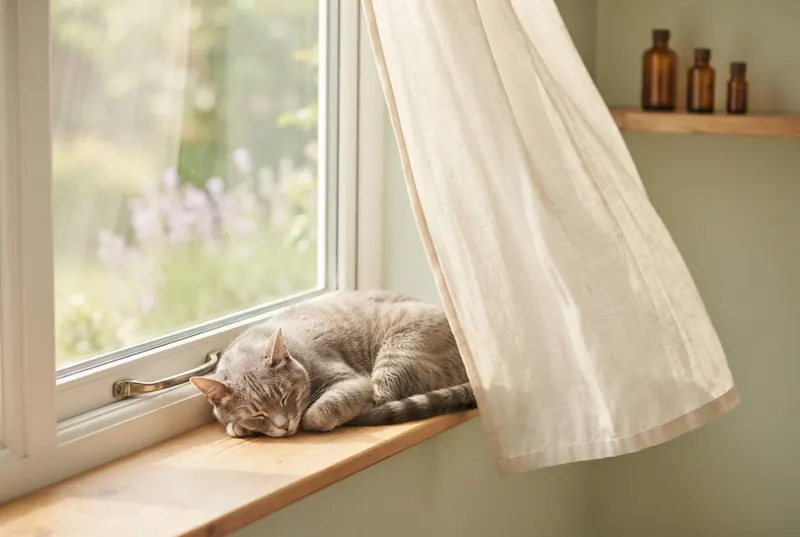
Pets need extra care, especially cats. Veterinarian Kia Benson of Pet Poison Helpline explains that a cat’s liver can’t break down some of these oils the way ours can. Peppermint, eucalyptus, tea tree, citrus and ylang ylang have all made cats sick. A diffuser can also leave tiny droplets on fur, and cats lick them off. If you have a pet, check with your vet before diffusing. And please don’t put oils directly on your pet.
5. Citrus oils and the sun
The Canadian Alliance of Aromatherapy says some citrus oils, including bergamot, grapefruit, lemon and lime, can make skin burn more easily in sunlight. If you’ve used one on your skin, the National Association for Holistic Aromatherapy suggests staying out of the sun, and tanning beds, for at least 24 hours.
If something goes wrong
These are the Ontario Poison Centre’s first steps:
- On your skin: Stop using it. Wash with mild soap and lukewarm water for several minutes.
- In your eyes: Rinse with lukewarm water for at least 15 minutes.
- Swallowed: Call the Ontario Poison Centre at 1-800-268-9017. It’s open 24 hours a day.
- Trouble breathing: Call 911.
If a pet seems unwell after being near an oil, move it to fresh air and call your vet.
Try this: Check your scent shelf
You’re invited to take a look at the oils and scented products you already have. Is there one that already feels calming or steadying to you? There’s no need to explain why.
Next, you might check it over. Is it in its original bottle, with a clear label? Is it somewhere little hands and paws can’t reach? Do you know how it’s meant to be used? If not, you could read the label, or set it aside until you do.
Want to explore more?
Scent is one way to settle in through your senses. For a few more ways, from noticing what’s around you to holding something comforting, you might try Five Grounding Exercises for Five Minutes.
This post shares general information, not medical advice. If you have questions about your own health, please check with a healthcare professional.
Not sure where to start?
You don’t have to have it all figured out. Kathleen is certified in aromatherapy. You’re welcome to book a free 30-minute Meet & Greet with her by Zoom, with your camera on or off. It’s a chance to ask questions and see if this feels right for you.
Some ideas in this post are adapted from A Holistic Wellness Journey™ by Antonia Gattellaro and its companion guides, Journey Together and My Holistic Wellness Journey, written by Antonia Gattellaro and Kathleen Taylor-Nelson. All three are coming soon.
Sources for this post
Want to read more? Here’s where some of the ideas in this post come from.
Benson, K. (2018). Essential oils and cats. Pet Poison Helpline. Read the article.
Canadian Alliance of Aromatherapy. (n.d.). Aromatherapy safety. Read the guidance.
Gattellaro, A. (in press). A holistic wellness journey. BookFuel Global Publishers.
National Association for Holistic Aromatherapy. (n.d.). General safety. Read the guidelines.
Ontario Poison Centre. (n.d.). Essential oils. Read the guidance.